Introduction
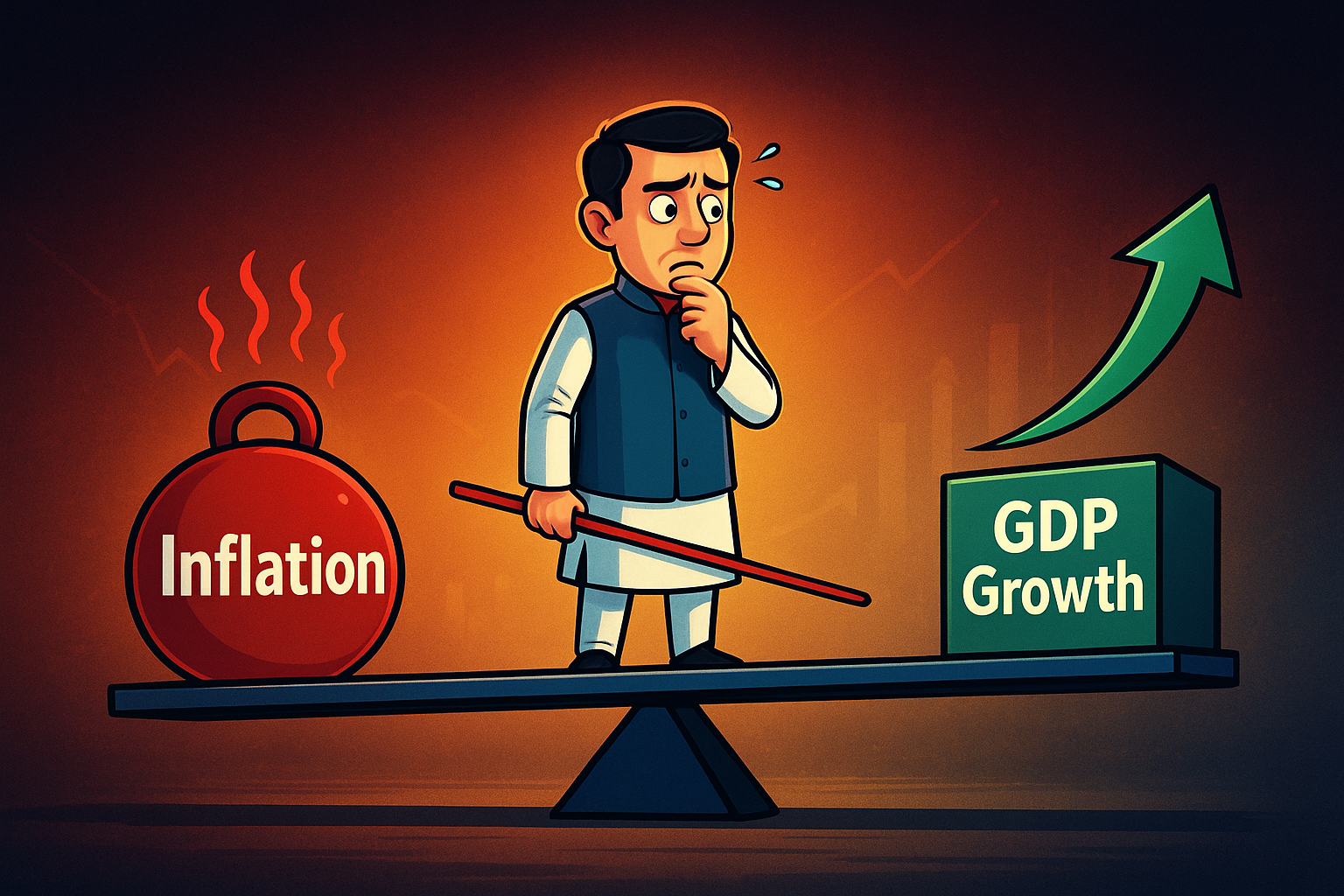
The Flexible Inflation Targeting (FIT) framework in India, which aims to maintain inflation at 4% ± 2%, is set to end in March 2026 and is currently under review. The Reserve Bank of India (RBI) has released a detailed discussion paper seeking views on the future of India’s monetary policy framework. Since its adoption in 2016, FIT has helped keep inflation largely range-bound despite global and domestic shocks, marking a significant evolution in India’s macroeconomic management.
The debate now focuses on the type of inflation to target, the ideal inflation level for sustainable growth, and whether the current tolerance band remains suitable for India’s economic realities.
KEY ANALYSIS
Importance of Inflation Control
- High inflation acts as a regressive tax, disproportionately affecting poorer households whose incomes cannot keep pace with rising prices.
- Persistent inflation erodes savings, distorts investments, and undermines long-term growth prospects.
- The Chakravarty Committee earlier suggested that about 4% inflation is acceptable for India, reflecting structural price adjustments required for growth.
- Since the end of automatic monetisation in 1994, the RBI has focused increasingly on institutional autonomy and inflation stability.
Headline vs Core Inflation
- For India, headline inflation is more appropriate to target since food price shocks often spill over into wages and other sectors.
- Food inflation does not arise solely from supply-side issues; it becomes amplified under expansionary monetary policy.
- The general price level cannot rise without an increase in money supply, echoing Milton Friedman’s classic argument.
- Indian data shows repeated second-round effects where food inflation pushes up core inflation through wage pressures.
Acceptable Level of Inflation
- Historical data since 1991 reveals a non-linear relationship between inflation and growth.
- The estimated threshold inflation for India is around 3.98%, beyond which economic growth begins to decline.
- Preliminary simulations for the post-2026 period indicate that inflation below 4% is most consistent with India’s growth prospects.
- There is limited justification for raising the target above 4%, given the risks of growth slowdown.
Inflation Band & Fiscal Linkages
- The current tolerance band of ±2% has provided adequate flexibility to navigate shocks.
- Remaining close to the upper limit (6%) for extended periods defeats the purpose of FIT, as growth drops sharply beyond this point.
- India's inflation history shows that high inflation in the 1970s and 1980s was driven by monetised fiscal deficits.
- FRBM discipline and the FIT framework must work together; weakening one undermines the other and threatens macroeconomic stability.
Overall Understanding
- FIT has strengthened India’s monetary credibility, but future success depends on disciplined fiscal policy and clarity in inflation benchmarks.
- Headline inflation remains the most relevant indicator for India’s diverse consumption basket.
- Evidence strongly supports retaining the 4% target with the existing tolerance band.
Conclusion
India’s experience with the Flexible Inflation Targeting framework demonstrates that a stable and credible monetary policy regime can significantly improve macroeconomic stability. With evidence pointing toward 4% as the optimal inflation level, and headline inflation proving to be the most relevant target, the continuation of the current framework appears both prudent and necessary. The next phase up to 2030–31 must balance inflation control with fiscal responsibility to safeguard growth and prevent macroeconomic slippages.

 Why in News?